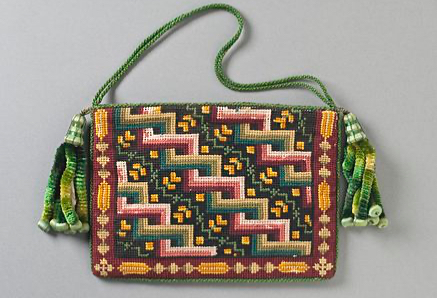
Needlepoint, Berlin Work and Canvas Work are different names for related forms of embroidery that have evolved over time. Here is a concise history of these forms of embroidery.
Needlepoint is a form of counted thread embroidery in which yarn is stitched through a stiff open weave canvas.
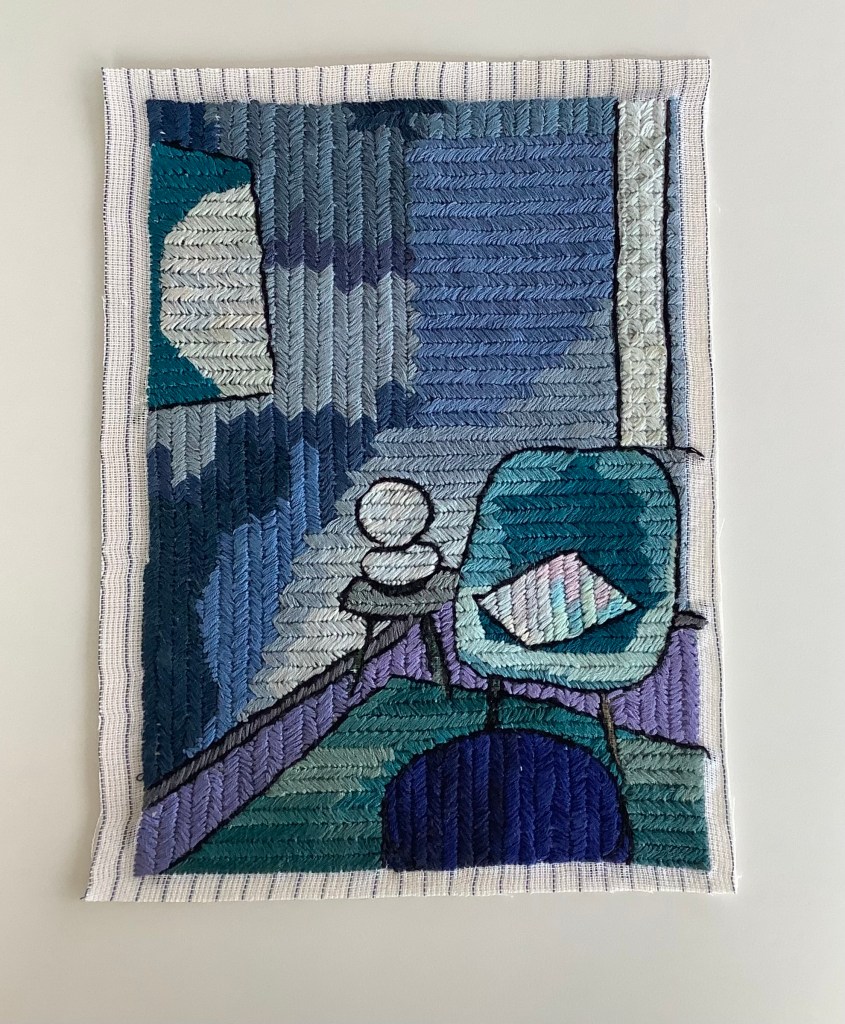
Origins and Development:
The modern form of needlepoint began to take shape in the 16th century in Europe, particularly in England. It was used to create intricate and durable household items like cushions, chair covers, and wall hangings.
The technique has ancient origins, with examples found in Egyptian tombs and Greek and Roman artifacts.
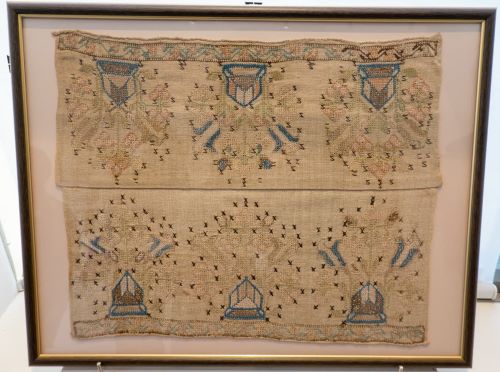
Traditionally, needlepoint is worked on canvas made from linen or cotton. The designs are often geometric or floral and are stitched using wool, silk, or cotton thread. Common stitches include tent stitch, basketweave stitch, and continental stitch.
Berlin Work is a specific type of needlepoint that became popular in the 19th century, particularly from 1804 onwards when the first Berlin woolwork patterns were published.
Berlin Work is characterized by brightly colored floral and geometric patterns, often using wool or silk threads on canvas. The patterns were printed on grid paper, making them easy to follow and reproduce.
It was especially popular among middle-class women in Victorian England and the United States. The portability and ease of the patterns made it a favorite pastime. Berlin work’s influence extended to other forms of decorative arts and home décor. The vibrant designs were often used for chair covers, cushions, and wall hangings.

Berlin work patterns were often printed on paper and included a wide range of motifs, from florals and animals to elaborate scenic designs. These patterns allowed for greater detail and more vibrant colors compared to earlier needlepoint. The rise of Berlin work was also fueled by the Victorian era’s fascination with home decoration and craftwork.
 Manuela Caniato Textile Art