February 22 – July 7, 2024
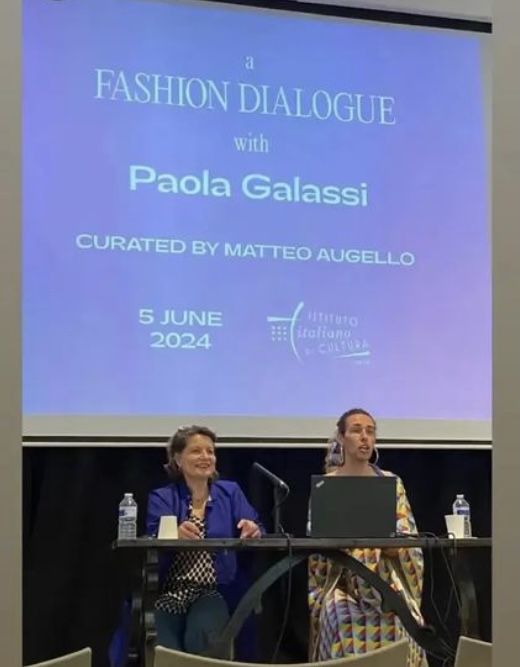
My brilliant friend Paola Galassi was invited to London by the Istituto Italiano di Cultura to discuss her illustrious career in theater. The evening was simply marvelous: Paola captivated the audience with her wit, charm, warmth, and generosity, just as she has done since childhood.
Taking advantage of my trip to London, I visited the Sargent exhibition at Tate Britain. I don’t recall ever seeing a Sargent exhibition before, so this was a perfect opportunity to delve into his art. Sargent’s work reminded me a great deal of Henry James. His portraits of ladies seem to reflect the same taste that pervades “The Portrait of a Lady,” published by Henry James in 1881.
James was born in 1843, while John Singer Sargent was born in 1856, making Sargent about 13 years younger. It’s quite possible that Sargent had read James’ work and may have drawn inspiration from his portrayal of women. Or perhaps the influence went both ways.

The women depicted by James and painted by Sargent have much in common. They belong to the upper echelons of society, are cultured, and exhibit extreme elegance and refinement. Encased in extraordinary, spectacular garments, these women have a limited freedom of movement that gives them an ethereal, somewhat aloof appearance, accentuated by the corsets they wore.
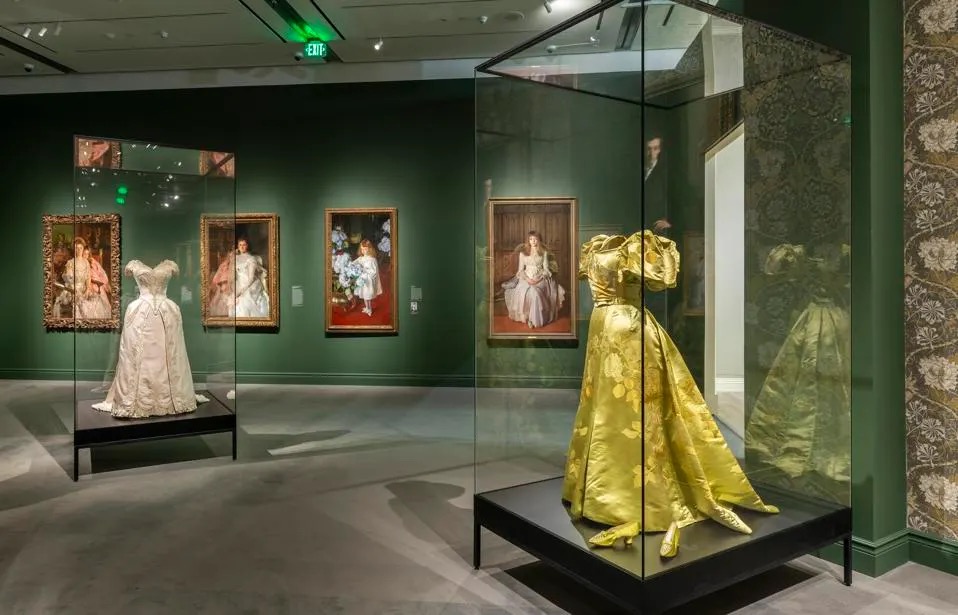
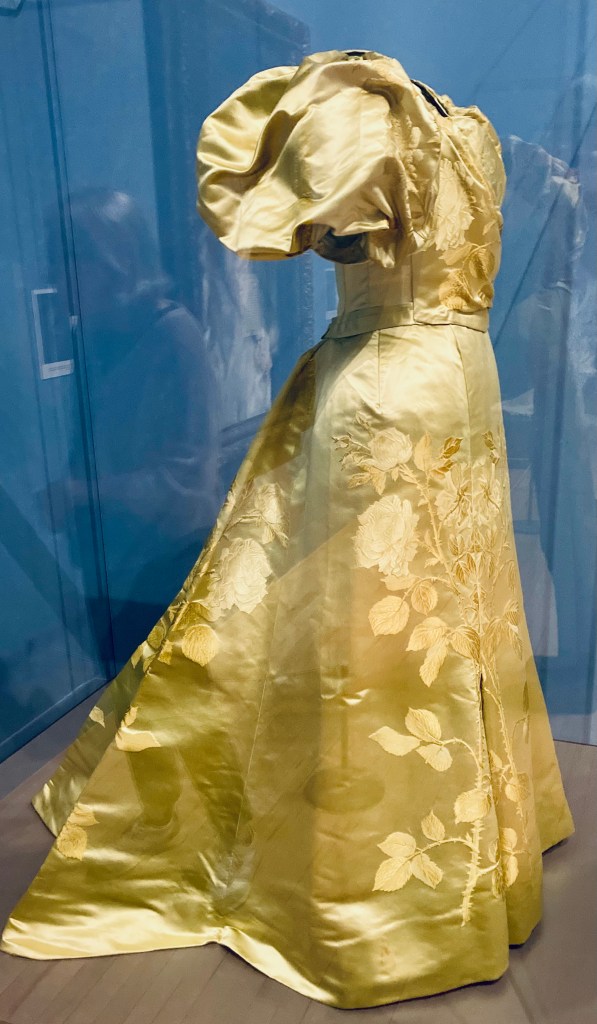
A unique aspect of this exhibition is the presentation of the actual garments alongside some of Sargent’s portraits. Next to the painted lady’s attire, the curators have displayed the actual dress in a plexiglass case. While the plexiglass makes photographing the dresses somewhat challenging, it’s still manageable.
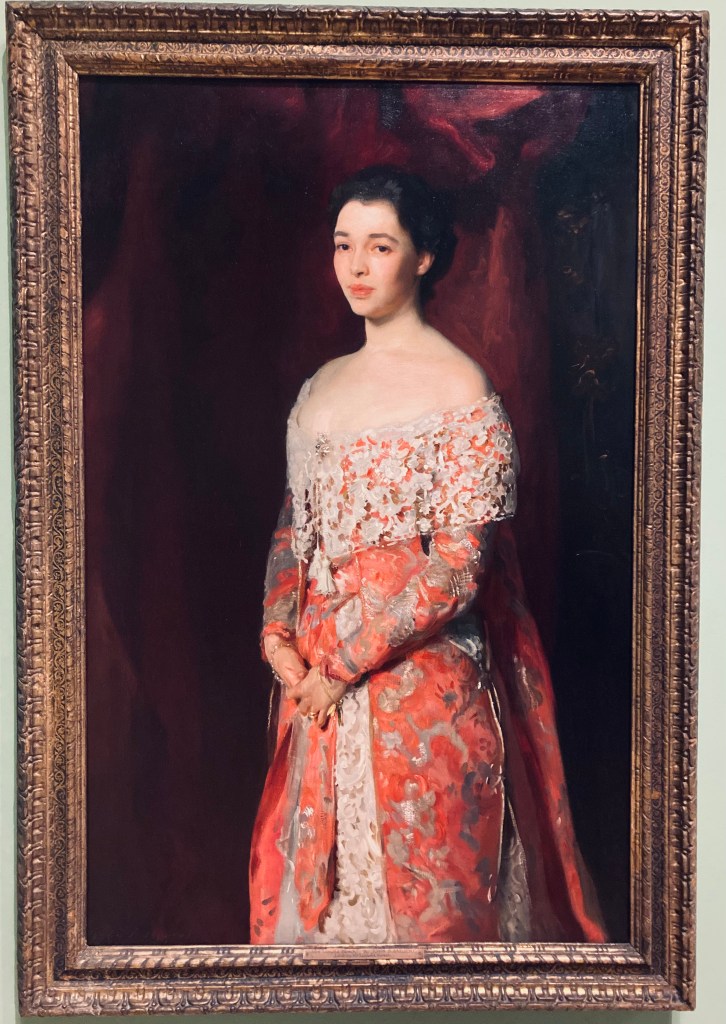
In one portrait, you can admire a lace cape painted with great precision and attention to detail.

In another, a lady is depicted in a sumptuous white gown, which is also on display. Despite her strong preference for vibrant, vivid colors, Sargent chose to paint her in white. The curators have presented both the white dress and her favored bright green dress to showcase John Singer Sargent’s comprehensive artistic direction in his portraits.

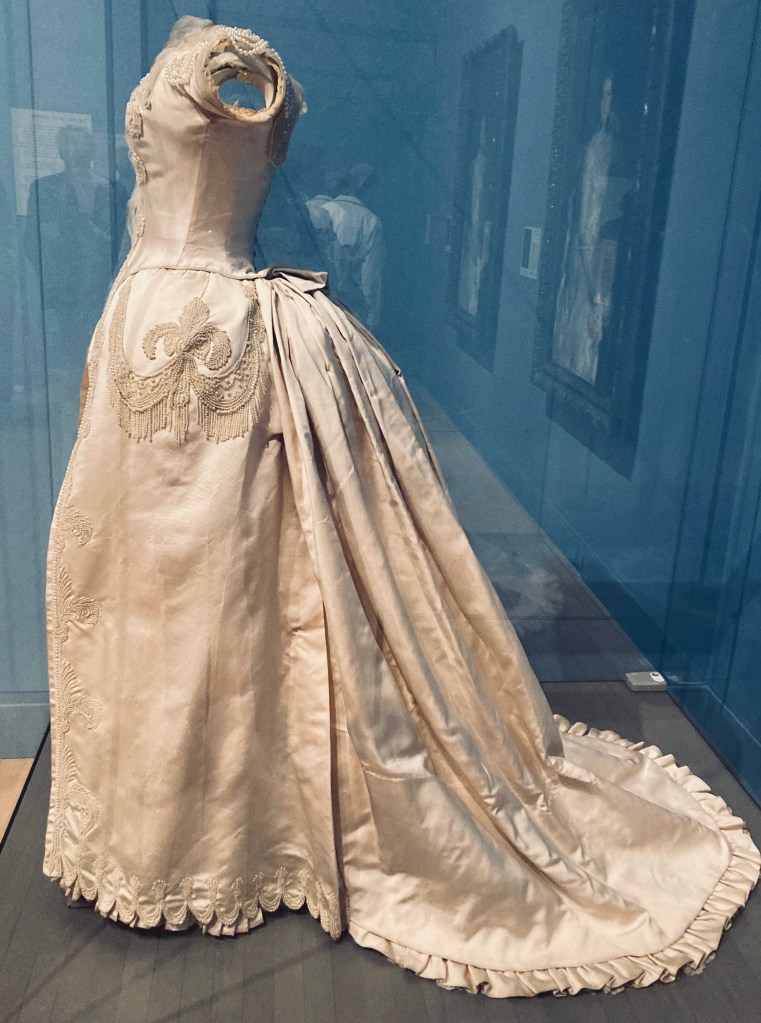
The term “artistic direction” in the context of his portraits hasn’t always been well-received by traditional critics. However, this exhibition emphasizes that Sargent meticulously oversaw all aspects of his portraits: from layout to attire to lighting, with a preparation comparable to that of a modern photo shoot.
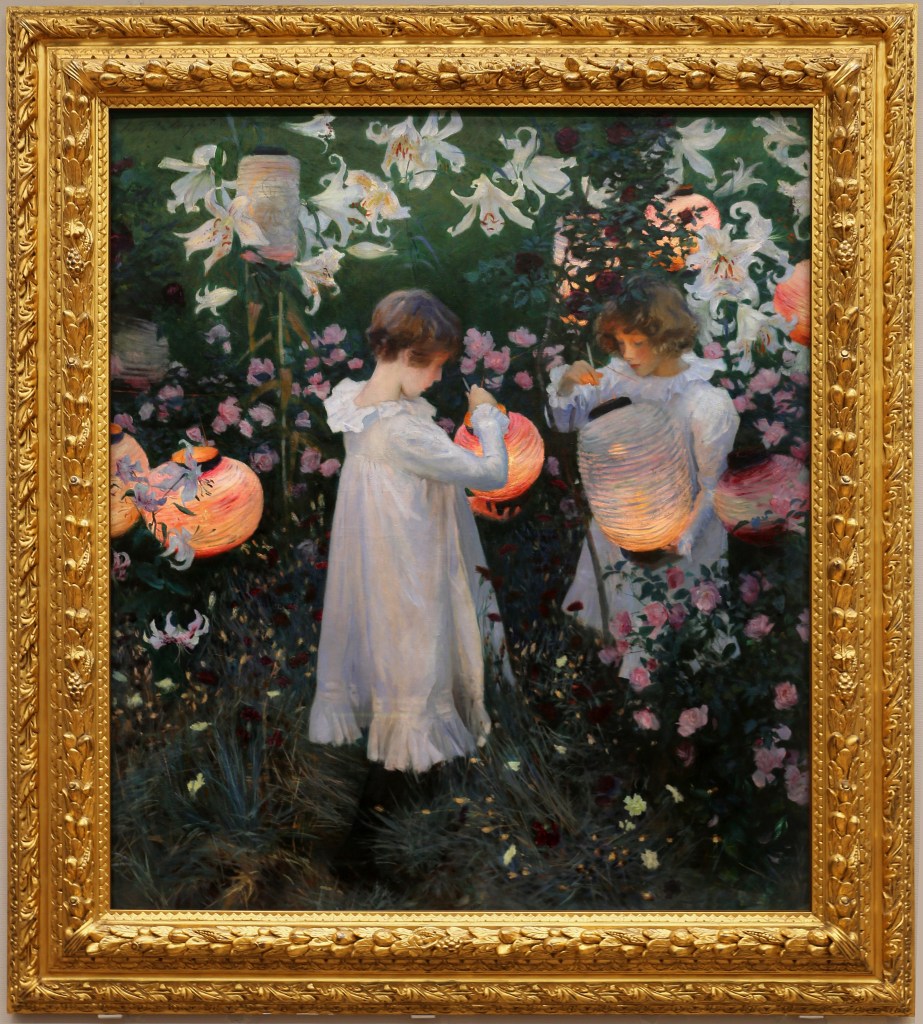
One of my favorite paintings in the exhibition is “Carnation, Lily, Lily, Rose,” which depicts two children playing in a garden with Chinese lanterns.
 Manuela Caniato Textile Art