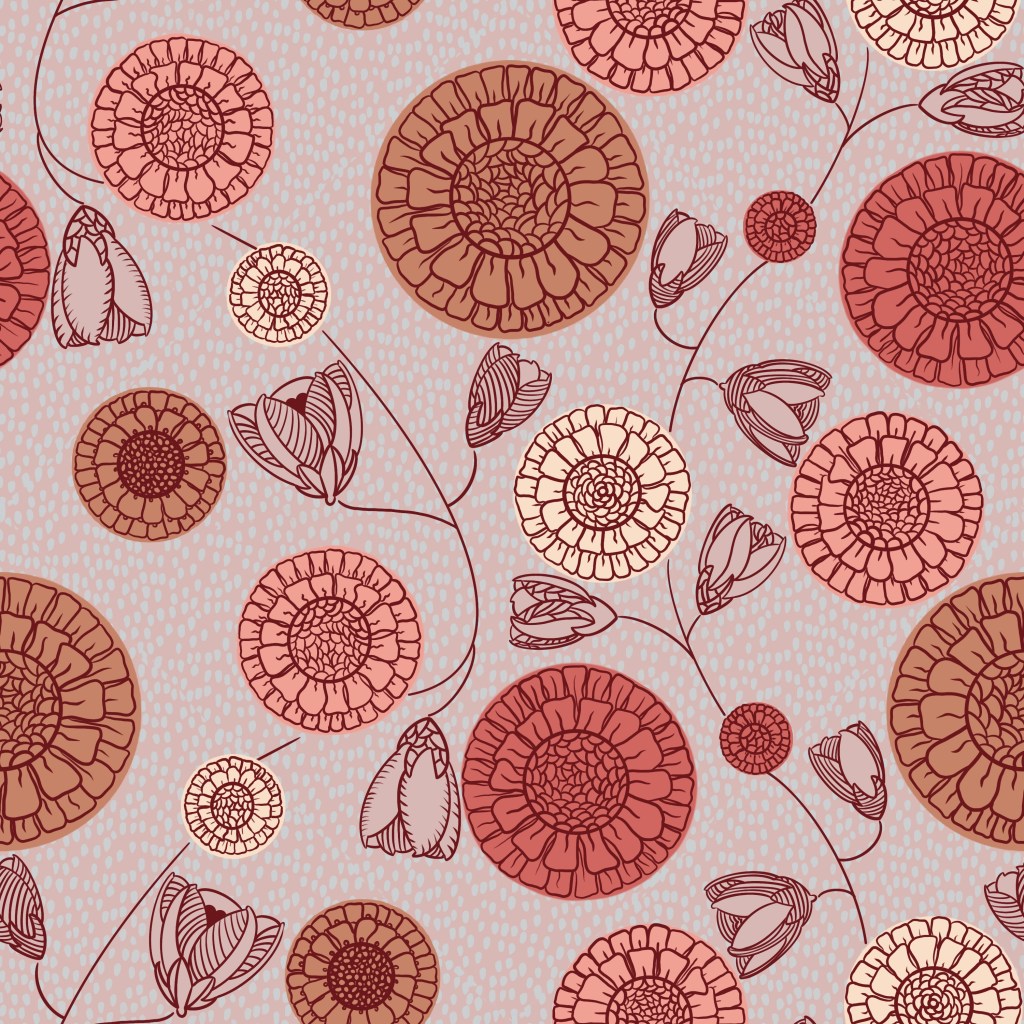
This particular pattern is inspired by chintz, a type of fabric that originated in India in the 17th century. Colorful and often floral, chintz introduced woodblock-printed cotton to Europe, which was revolutionary and previously unknown. Cotton is fresh, easily printable, retains its sheen, and is most importantly, washable. I love drawing patterns with Procreate. These patterns express my passion for decoration and vibrant colors. While I enjoy embroidering with a single color, my patterns desire to reflect a colorful little universe.
Chintz became widely popular in France and England for interior decoration. Indian cotton began dominating Europe around 1600 with the establishment of the British East India Company. By 1650, cotton cloth represented 75% of the company’s total exports.
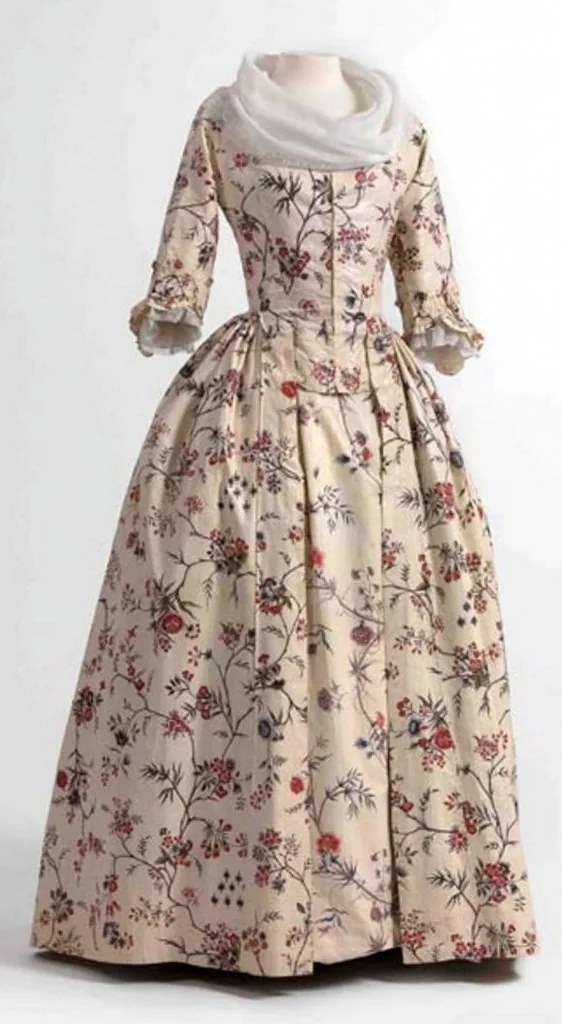
Typically botanical or floral in theme, chintz is characterized by its multicolored, repeating patterns featuring leaves, plants, flowers, trees, gardens, or animals set against a plain light background. The sturdy, often shiny material is also notable for its stain resistance compared to other fabrics of similar strength.
In the mid-1600s, Europeans began using chintz to make clothing in addition to decor items. As the East India Company continued to import chintz to Europe throughout the 17th and 18th centuries, demand for the fabric skyrocketed. The craze for chintz was so intense among the European aristocracy that both France and England banned its import to protect their own textile mills.
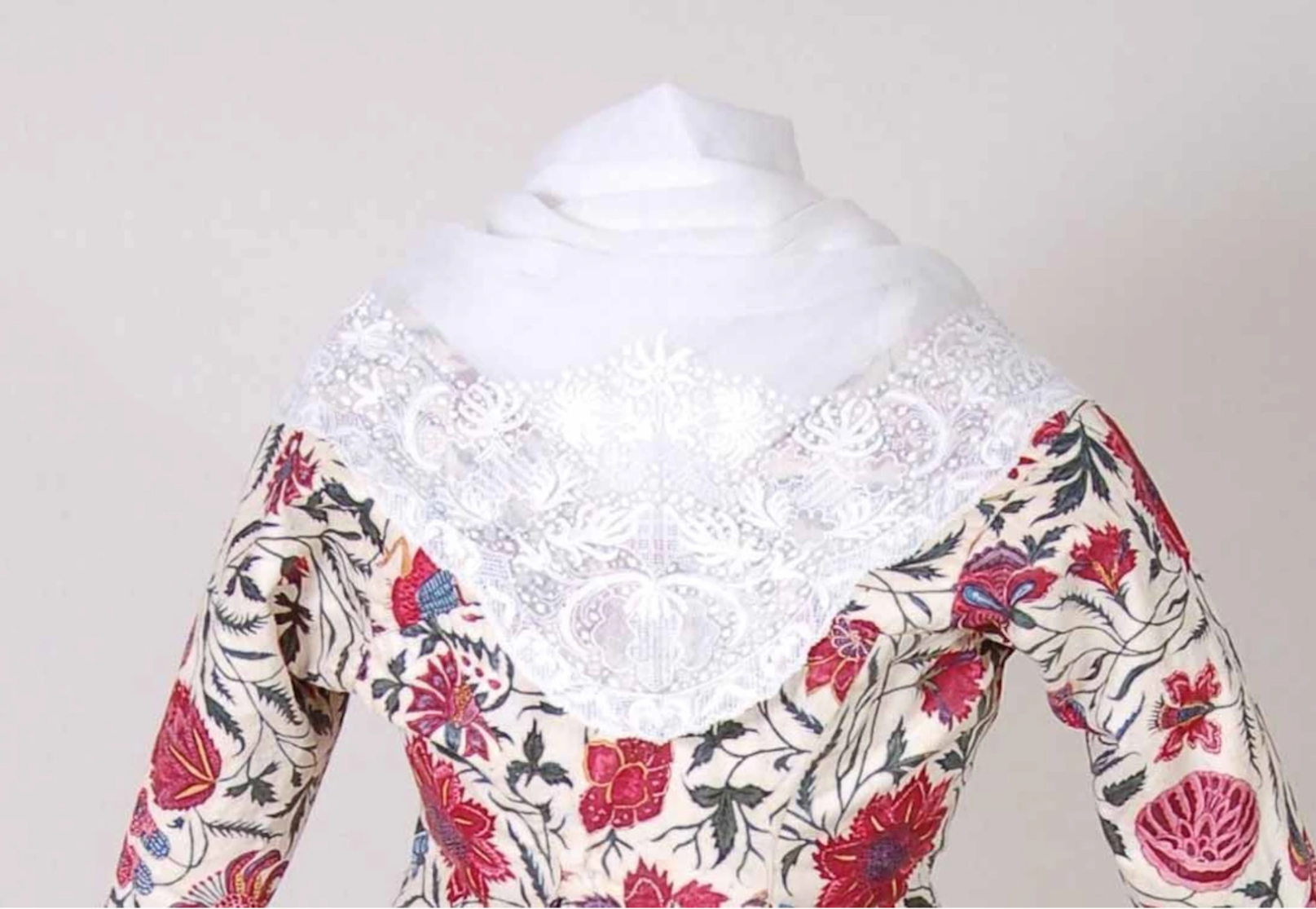
By 1680, chintz had become so popular that it was considered a threat to the French and English textile industries, which were not yet able to produce it themselves. From 1686 to 1759 in France, citizens were banned from producing, importing, or even wearing chintz. The Parliament of Great Britain enacted a similar law soon after, forbidding the use and wearing of imported chintz as well as its use in household upholstery from 1700 to 1774.
With the manufacturing innovations of the Industrial Revolution, Westerners were finally able to reproduce fabrics in the style of Indian chintz by the mid-19th century. This led to an inundation of cheap, poorly constructed, and badly printed imitations. Despite chintz’s fall from grace, the Victorians remained obsessed with it.
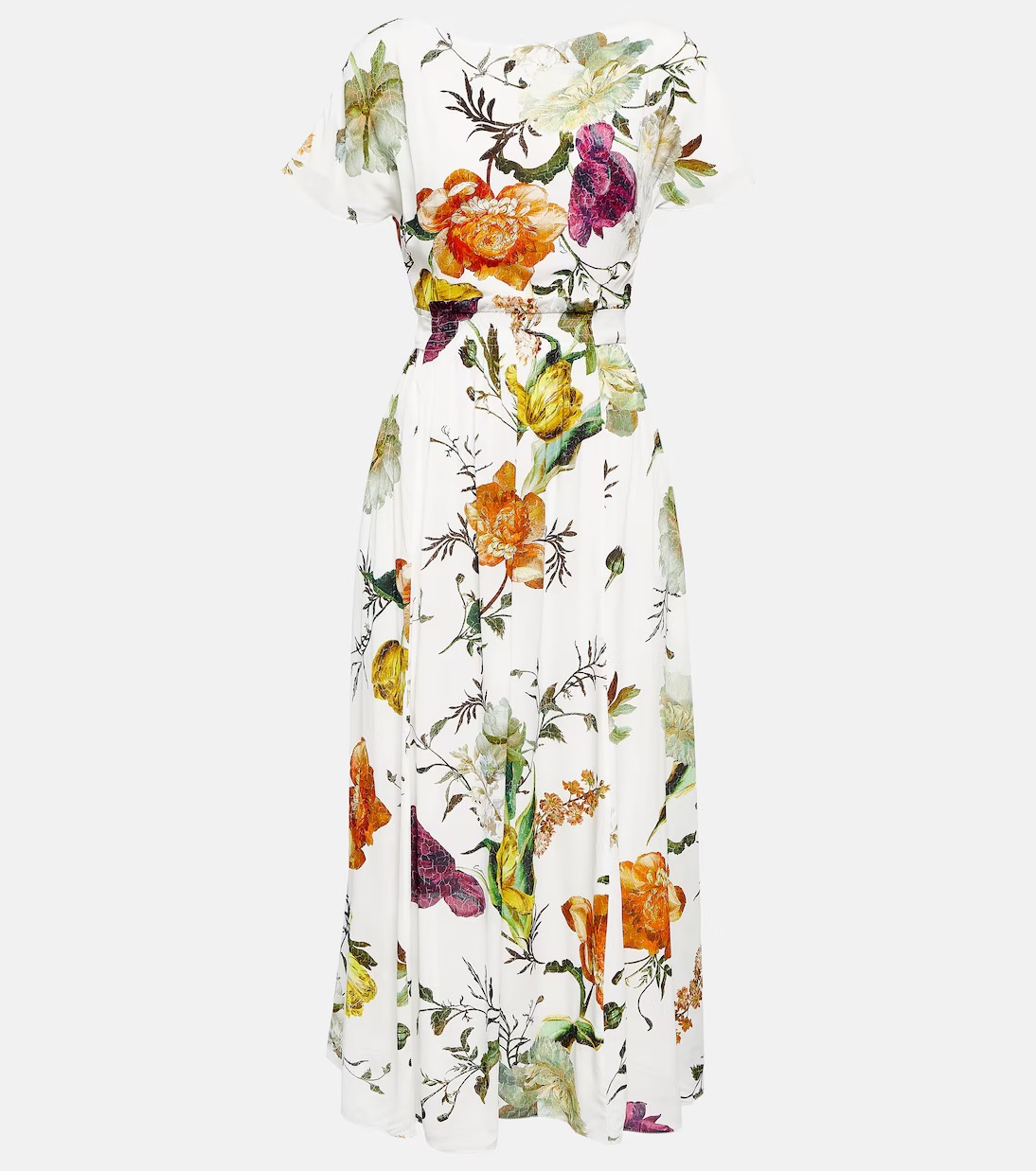
In fashion, chintz is making a comeback with designers incorporating its colorful and bold patterns into both classic and contemporary styles. Modern chintz fabrics are used in garments like blouses, skirts, and even nightwear, adding a touch of vintage elegance to everyday clothing. The fabric’s lightweight and breathable nature, primarily because it’s made from cotton, makes it suitable for various types of clothing, including children’s wear and casual shirts for men and women.
 Manuela Caniato Textile Art